


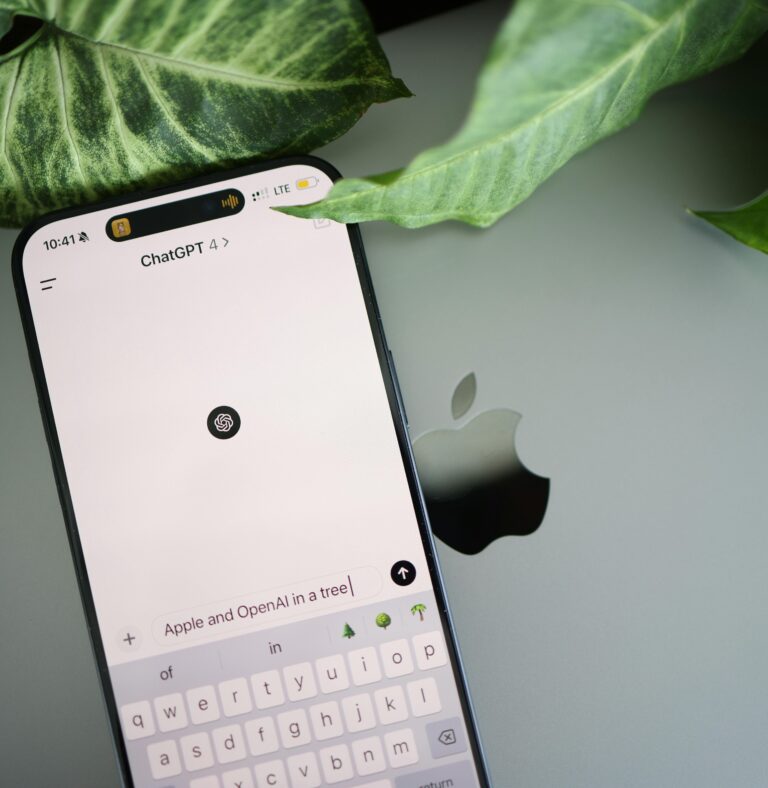

Everyone’s talking about ChatGPT. But how many people are actually using it every day, and what does that mean for the future of search?
These are questions we get asked a lot at TAL, particularly from businesses trying to understand how the rise of AI is changing how people find information online. So let’s dig into the numbers and, more importantly, what they mean for your visibility.
The short answer: Billions of prompts, every single day
ChatGPT processed around 2.5 billion prompts per day as of July 2025, up from 1 billion daily messages just eight months earlier. That’s a staggering pace of growth by any measure.
To put it in perspective, OpenAI CEO Sam Altman confirmed that ChatGPT reached the 1 billion daily message milestone in December 2024 – a benchmark it took Google eight years to hit for search. ChatGPT got there in under two years.
As of early 2026, ChatGPT has over 900 million weekly active users globally, with roughly 188 million daily visitors to the platform. It is now the sixth most visited website in the world.
But are those “searches”?
Here’s where it gets more nuanced, and where the distinction really matters for SEO.
Not every ChatGPT prompt is a search. People use it to write emails, debug code, brainstorm ideas and have conversations. Research from OpenAI and Harvard, which analysed 1.5 million real conversations, found that around 21-24% of ChatGPT prompts are genuinely search-like in intent.
Apply that to the 2.5 billion daily prompt figure and you get roughly 66 million search-equivalent queries per day.
That sounds enormous … Until you compare it to Google.
ChatGPT vs Google: The search gap is still massive
Google handles approximately 14 billion searches per day, based on its confirmed figure of over 5 trillion searches per year. By that comparison, ChatGPT’s search-like queries represent around 0.5% of Google’s volume – not yet the seismic shift in search behaviour some headlines suggest.
Even DuckDuckGo currently outpaces ChatGPT in referral traffic to websites. And while ChatGPT accounts for roughly 17% of total digital query volume (including all prompt types), Google still controls nearly 80% of global digital queries.
That said, the direction of travel is clear. ChatGPT’s daily prompt volume grew 5.8x in a single year. No search engine in history has grown that fast.
Why this matters for SEO right now
The numbers tell an interesting story for anyone thinking about organic visibility. ChatGPT is not replacing Google – at least not yet. Studies consistently show that 95% of ChatGPT users still use Google alongside it. People are using both, not choosing between them.
What is changing is how people search. Users increasingly turn to AI tools for definitions, comparisons, how-to questions and research tasks – queries that were once almost entirely Google’s territory. Meanwhile, Google is responding with its own AI features, and the lines between traditional search and AI-assisted answers are starting to blur.
For businesses, this creates a real challenge: your content now needs to perform well not just in Google’s index, but in the answers that AI tools surface. That means quality, authority and relevance matter more than ever, not less.
What does this mean for your SEO strategy?
The fundamentals of good SEO haven’t changed. High-quality content, strong backlinks, technical health and genuine topical authority are still the pillars of sustainable organic visibility. What is changing is the bar you need to clear to be considered trustworthy enough for AI tools to cite and reference.
A few things worth thinking about:
- Create SEO content that answers questions clearly and directly. AI tools pull from authoritative, well-structured sources. If your content is vague or thin, it won’t surface in either Google or AI-generated answers.
- Invest in technical SEO to make sure your site is crawlable, fast and properly structured. The foundations still matter, and they underpin everything else.
- Start thinking about AI search optimisation alongside traditional SEO. Visibility in tools like ChatGPT and Perplexity is becoming a genuine business consideration, and early movers will have an advantage.
- Don’t abandon Google for AI search. With 14 billion daily searches, Google is still where the vast majority of discovery happens. Your Google visibility remains your most important asset.
The smart approach is to build an SEO services strategy that earns visibility across both traditional search and the AI tools that are increasingly shaping how people find answers.
The search landscape is evolving
ChatGPT processes billions of prompts every day and its growth is genuinely extraordinary. But in pure search terms, Google remains dominant by a considerable margin. For businesses focused on organic visibility, the priority should still be getting your Google presence right, while keeping a close eye on how AI is reshaping user behaviour.
If you want to understand how the evolving search landscape affects your visibility, or you’re looking to build a strategy that performs in both traditional and AI-driven search, get in touch with our team. We can help you work out exactly where your opportunities are and build a plan that drives real results.


We’d love to chat
The best ideas start with a good old conversation. Let’s have a chat about how we can help you.
Complete the form and one of the directors will be in touch.
Or just pick up the phone and call us, we’re on 03334049888.
Awards & Accreditations